Tick Season Is Here: How to Protect Yourself and Your Family Outdoors
Tick Season Is Here: How to Protect Yourself and Your Family Outdoors
May 10, 2026
Spring and summer in Michigan are meant to be enjoyed.
After a long winter, most of us are ready to get outside, walk the trails, work in the yard, play with the dog, visit the parks, and enjoy the fresh air. In Grand Blanc and throughout Michigan, we are blessed with beautiful outdoor spaces. But as more people head outside, tick prevention becomes something worth taking seriously.
The good news is this: you do not have to be afraid of going outdoors.
You just need to be aware, prepared, and willing to take a few extra steps when you come back inside.
Ticks are commonly found in wooded areas, brushy spaces, tall grass, leaf piles, and natural outdoor areas. In Michigan, tick-borne diseases have become a growing concern, especially Lyme disease and anaplasmosis. The Michigan Department of Health and Human Services has reported that Lyme disease cases have increased in the state in recent years, which makes prevention even more important for families, pet owners, hikers, gardeners, and anyone who spends time outside.
As a physician, I never want people to stop living their lives because they are afraid of what could happen. Movement, fresh air, sunshine, and time in nature are all important parts of wellness.
But I also believe in being practical.
A few smart habits can make a big difference.
Where Ticks Are Most Likely to Be Found
One of the first things to understand is where ticks usually live.
If you are walking on a paved sidewalk, a concrete path, or a well-maintained trail with very little grass, your chance of picking up a tick is usually much lower. Ticks are not typically jumping onto you from the middle of a sidewalk.
The higher-risk areas are usually tall grass, brush, wooded spaces, and areas where pets or wildlife travel.
This matters because a lot of tick prevention is simply being aware of your environment. If you are walking through deep grass, working near brush, cleaning up leaves, camping, hunting, or letting your dog run through the woods, it is worth taking extra precautions.
My dog Willow is a good example. When we go walking, I might put in two miles, and she probably puts in ten. She is running through the woods, the grass, and all the places where ticks like to hide. That means she needs to be checked, and I need to be checked too.
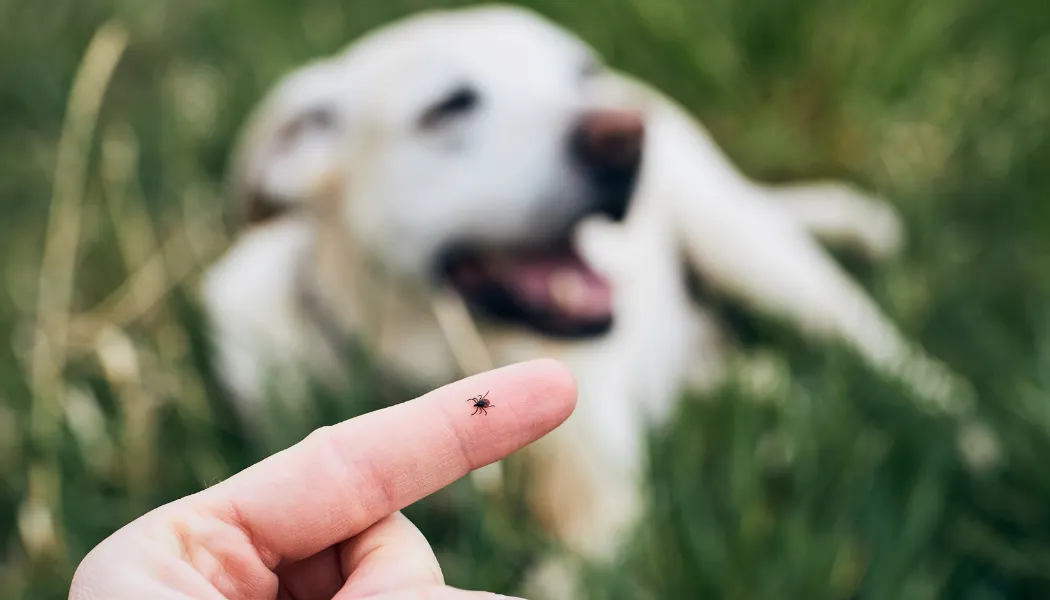
This is especially true for families with pets. Dogs and cats can bring ticks into the home after being outside. Even if the tick does not attach to your pet, it may still hitch a ride indoors.
Clothing Protection Can Help
One helpful prevention option is treating clothing and outdoor gear with permethrin.
Permethrin is used on clothing, shoes, socks, boots, and gear to help repel or kill ticks. The CDC recommends treating clothing and gear with products containing 0.5% permethrin, or using clothing and gear that has already been treated. Some treated clothing can remain protective through multiple washes, depending on the product directions.
There are even services where you can send your outdoor clothing away and have it professionally treated. Some of these treatments are designed to last through many washes, which can be helpful for people who spend a lot of time outside.
You can also buy permethrin products yourself and apply them to clothing and gear at home. The important thing is to follow the label instructions carefully. Permethrin is meant for clothing and gear, not for direct application to skin.
For people who hike, camp, garden, hunt, golf near wooded areas, or spend time in the yard, this can be a simple way to build an extra layer of protection.
Use Tick Repellent on Exposed Skin
In addition to treating clothing, using an EPA-registered insect repellent can help reduce your risk of tick bites.
Many people are familiar with DEET, which is found in products like Deep Woods Off and similar repellents. The CDC also lists other active ingredients that may help prevent tick bites, including picaridin, IR3535, oil of lemon eucalyptus, PMD, and 2-undecanone.
The key is to use the product properly.
Spray exposed skin, arms, legs, socks, shoes, and clothing as directed. Avoid spraying near the eyes or mouth, and be careful when applying repellent to children. Parents should apply the product for younger children and avoid putting it on their hands, since little hands often end up near the face.
This is not about being fearful. It is about giving yourself a better chance of avoiding a bite.
The Tick Check Matters Most
Even with treated clothing and repellent, you still need to check yourself.
This is one of the simplest and most important habits you can build during tick season. When you come inside, take thirty seconds to look over your body. Check your arms, legs, ankles, waistline, behind the knees, around the hairline, behind the ears, and anywhere clothing fits tightly.
Ticks can be very small, especially in the nymph stage, so slow down enough to really look.
The CDC recommends checking your body, clothing, gear, and pets after being outdoors. Showering soon after coming inside may also help wash away unattached ticks before they have a chance to bite.
This is where prevention becomes very practical. You can enjoy your walk, your yard, your golf game, or your time at the park, then come home and simply check.
It is a small habit, but it matters.
Do Not Forget Your Pets
Pets are a big part of this conversation.
If your dog is running through tall grass, wooded trails, or brushy areas, make tick checks part of the routine. Look around the ears, neck, belly, legs, paws, and tail area. If your pet sleeps in your bed or spends time on your furniture, this becomes even more important.
Also talk with your veterinarian about appropriate flea and tick prevention for your pet. There are many options available, and your vet can help you choose what is safest based on your pet’s age, size, health, and lifestyle.
This is not only about protecting the pet. It is also about protecting the household.
What To Do If You Find a Tick
If you find a tick attached to your skin, remove it as soon as possible.
Use fine-tipped tweezers, grasp the tick close to the skin, and pull upward with steady, even pressure. Do not twist, jerk, or crush the tick. After removing it, clean the area with soap and water or rubbing alcohol.
If you are unsure how long the tick was attached, if you develop a rash, fever, fatigue, body aches, joint pain, or flu-like symptoms, contact your healthcare provider. Some tick-borne illnesses can be treated effectively, especially when addressed early.
That is why paying attention matters.
Enjoy the Outdoors, But Be Smart
The message I want people to hear is simple: do not let tick season stop you from enjoying your life.
Go outside. Walk the trail. Play with the dog. Garden. Spend time with your family. E
njoy Michigan.
Just take prevention seriously.
Treat your clothing when appropriate. Use a good repellent. Avoid walking through tall grass when you can. Check yourself when you come inside. Check your pets.
And if something does not look or feel right after a tick bite, reach out to your doctor.
Health is not about living in fear. It is about living with awareness.
For more health and wellness topics, visit AskDrBouvier.com/blog and follow along for more videos and helpful updates from Dr. Robert Bouvier.
Have questions about tick bites, prevention, or symptoms after being outdoors?
Dr. Robert Bouvier and his team are here to help patients in Grand Blanc and the surrounding Genesee County area.
Call the office to learn more or visit AskDrBouvier.com for more health and wellness education.